Lighthouse vs Trovio: one starts the conversation, the other works the deal
Trovio helps you get a brand's attention. Lighthouse picks up the moment they write back.
By Ryan Figueroa, Co-founder of Lighthouse, full-time creator. .
Full disclosure: my brother Kevin and I build Lighthouse, so I'm biased.
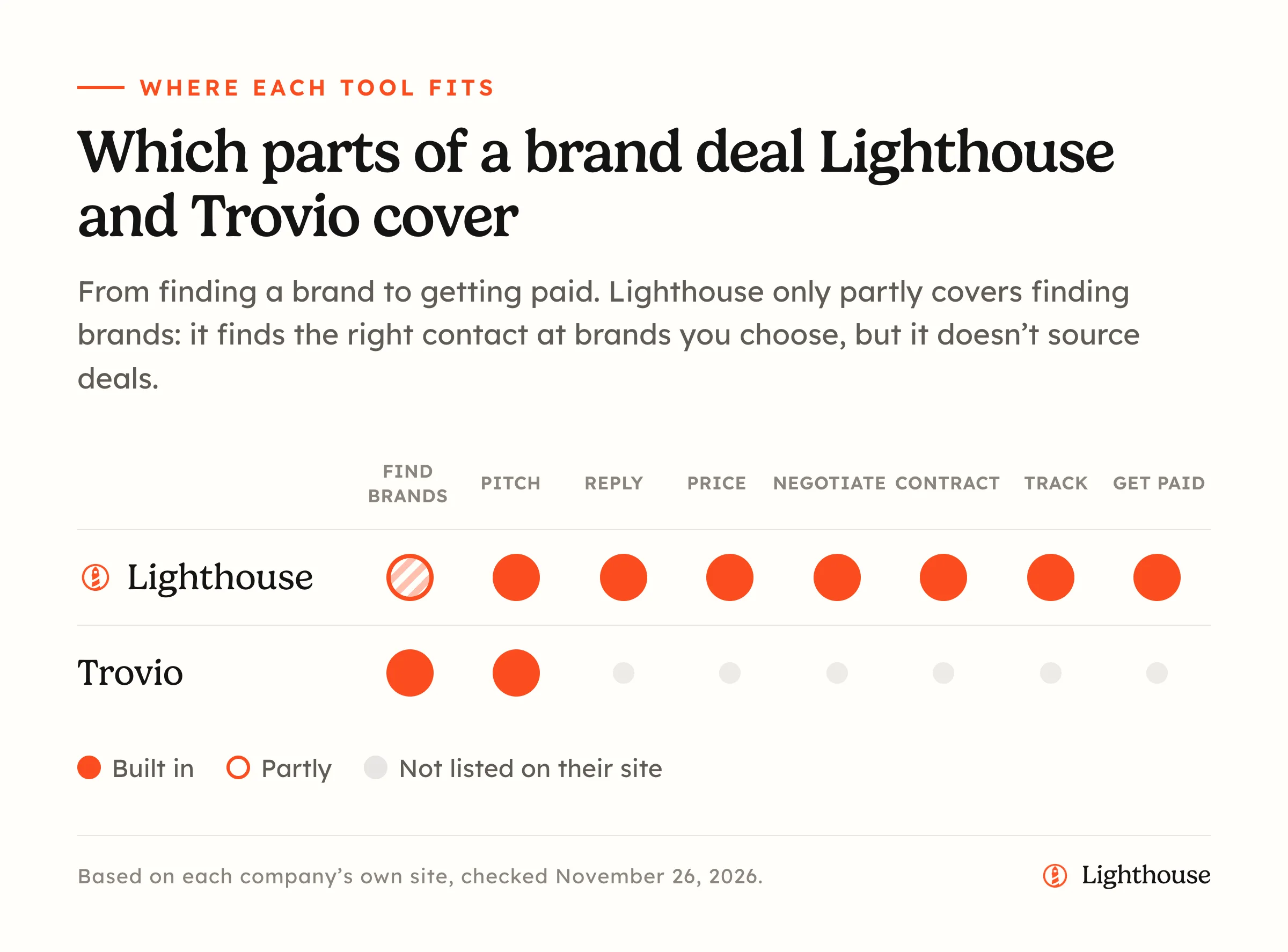
These two tools mostly live at opposite ends of a brand deal. Trovio is built for the moment before a brand knows you exist. Lighthouse is built for everything after a brand writes back. That makes this less of a head-to-head than most comparisons, and it's why a lot of smaller creators could reasonably use both.
Lighthouse vs Trovio at a glance
| Lighthouse | Trovio | |
|---|---|---|
| Price | $99/month or $940/year | $29/month, all features |
| Commission | 0% | 0% ("No agency cut, ever") |
| Main job | Running deals once brands are talking to you | Getting a brand's attention in the first place |
| Media kit | Yes | Yes, built from your posts |
| Brand matching | Watchlist of creators whose brand partners get added automatically | Tiered shortlist of brands that fit your content |
| Pitch drafts | Finds the right contact and drafts the pitch | Three drafts per brand, each tied to a real post |
| Connects to your inbox | Gmail and Outlook | Not listed on their site |
| Replies to brand emails | Drafts every reply in your voice | Not listed on their site |
| Pricing and counters | Prices each offer, drafts counters | Not listed on their site |
| Contract review | Flags red flags and terms that changed from the thread | Not listed on their site |
| Invoicing | Built in, with follow-ups on late payments | Not listed on their site |
Trovio details come from gotrovio.com and its Product Hunt page, checked November 2026. Some of the FAQ answers on Trovio's site didn't load for me, so check their site for anything I've marked as not listed.
What does Trovio do?
Trovio reads your posts to figure out what your content is actually about, then turns that into three things you can use to pitch.
First, a shareable media kit built from your engagement data. Second, a brand shortlist sorted into tiers: obvious fits, brands with related audience overlap, and what it calls unexpected but defensible picks. Third, for each brand, three pitch drafts tied to a specific post of yours. You tune them, pick a channel and send them yourself.
It costs $29 a month with every feature included, it's aimed at creators from roughly 5K to 500K followers, and the company says it doesn't take a percentage of your brand deals. It also has analytics and post generation. Trovio launched on Product Hunt in 2025 and added its Pitch Kit in a 2.0 release this year.
Where do the two tools overlap?
Less than you'd think from the feature lists.
Both have a media kit and both help you pitch. The difference is where the pitch starts. Trovio starts from your content: it finds themes in your posts and matches brands to them, including the less obvious ones. That tiered shortlist, especially the "unexpected but defensible" tier, is a smart idea, and tying each pitch to a real post gives a brand a concrete reason to say yes.
Lighthouse starts from who's already spending. It finds the right contact at a brand you want to pitch and drafts the pitch, and it can watch creators in your niche and add their brand partners to your list automatically, since a brand already paying creators like you is the warmest lead you'll get.
If pitching is the part of the job you need the most help with right now, Trovio's approach is built around it, and it's cheaper.
What happens after a brand says yes?
This is where the comparison stops being close, because it's where Trovio's site stops.
Once a brand replies, the work that decides what you actually earn begins:
- The reply. Lighthouse connects to Gmail or Outlook and drafts a reply to every brand email in your voice. It learned from your past brand deals when you connected, so the draft sounds like you and knows what you've done before.
- The price. A rate card quotes everyone the same number. Lighthouse prices each offer for the brand asking, and usage rights, whitelisting and exclusivity all get priced in. A Fortune 500 brand with an ad budget doesn't get your small-brand price.
- The counter. When the brand pushes back, it drafts your counter. More on how to handle that moment in how to negotiate a brand deal.
- The contract. It flags red flags and anything that changed from what you agreed over email, and you sign in the app.
- The money. Every deal gets a project page with deliverables and deadlines, and Lighthouse creates the invoice and follows up when a brand pays late.
I couldn't find any of that on Trovio's site. That's not a knock on Trovio. It's a pitching toolkit, and it doesn't claim to be a deal assistant. It just means a successful Trovio pitch hands you a conversation you'll still have to run somewhere.
Where does Trovio win?
- Price. $29 a month is a third of Lighthouse.
- Brand discovery. The tiered shortlist is a genuinely useful way to find brands you wouldn't have thought to pitch.
- Pitches tied to your posts. Pointing a brand at a specific video you made beats a generic "I'd love to work together."
- You're early. If you're closer to 5K followers and have no inbound yet, you need conversations started before you need a deal assistant.
Which should you choose?
- Choose Trovio if you don't have many brands reaching out yet and your main job right now is getting their attention.
- Choose Lighthouse if brands are already in your inbox and the hard part is pricing, negotiating, contracts and getting paid. Lighthouse has pitching and a media kit too, so you won't need a second tool to pitch.
- Use both if you're growing and want Trovio's brand discovery feeding conversations that Lighthouse then works. When you send a Trovio pitch by email, the brand's reply lands in your inbox, where Lighthouse picks it up.
For the rest of the field, see the best AI tools for managing brand deals.
Frequently asked questions
How much does Trovio cost?
Trovio lists $29 a month with all features included, and says it takes no cut of your brand deals. Lighthouse is $99 a month or $940 a year with 0% commission and a free trial.
Does Trovio send pitches for me?
Not according to its site. Trovio drafts pitches, and you tune them, pick a channel and send them yourself. Lighthouse also drafts pitches for you to approve, and it never sends anything without your click either.
Can Trovio help me negotiate a brand deal?
I couldn't find negotiation, pricing help, contract review or invoicing on Trovio's site. Those are the parts of a deal Lighthouse is built around: pricing each offer, drafting counters, checking the contract against the email thread and handling late invoices.
Is Trovio good for small creators?
It's built for creators from roughly 5K to 500K followers, so yes. If you're small and mostly need to start brand conversations, Trovio's price and brand matching make sense. Once deals start coming in steadily, the work shifts to running them, which is where Lighthouse fits.
About the author: Ryan is a full-time creator and filmmaker with 95K followers on Instagram (@ryansfigueroa) and brand deals with Adobe, ASUS, Perplexity and more. He has never signed with a manager or agency. He builds Lighthouse with his older brother Kevin, and has talked with over a hundred full-time creators about how they price, sign and get paid for their deals.
Try Lighthouse free for 30 days. $99/mo, 0% commission.